
Gin and steel: the legend of the Seagram Building in Manhattan
Like the gin and tonic cocktail, this splendid New York building, designed by Mies van der Rohe on Park Avenue, has a history that dates back to Prohibition
The gin and tonic, like any cocktail with a pedigree, rests on two main legs: on the one hand, the exact proportion in the mixture of its components; on the other, a legend that adds character and mysticism to the origin of the combination.
According to experts, the gin and tonic is prepared with between one and three parts of tonic for each part of gin over ice cubes in a balloon glass, accompanying the mixture with a slice of lime.
The legend
A drink to fight malaria
Once the formula is known, legend has it that the gin and tonic was invented in the 18th century by the British army sent to India. With the aim of preventing and palliating the effects of malaria, the tonic, due to its quinine content, was the best known remedy. To sweeten the bitter drink, the officers in the colony mixed it with sugar, lime and gin, the brandy that was distilled with the local species, thus giving rise to one of the most famous cocktails on the planet.
Analogous to cocktails, an emblematic building also finds its foundations in proportion and legend.
Proportion because it is the principle that governs all good architectural work or, at least, one that seeks to transcend the dictates of passing fashions; the legend of a building encompasses the entire context, causalities and coincidences that led to the project, from the first sketches to the completion of its construction.
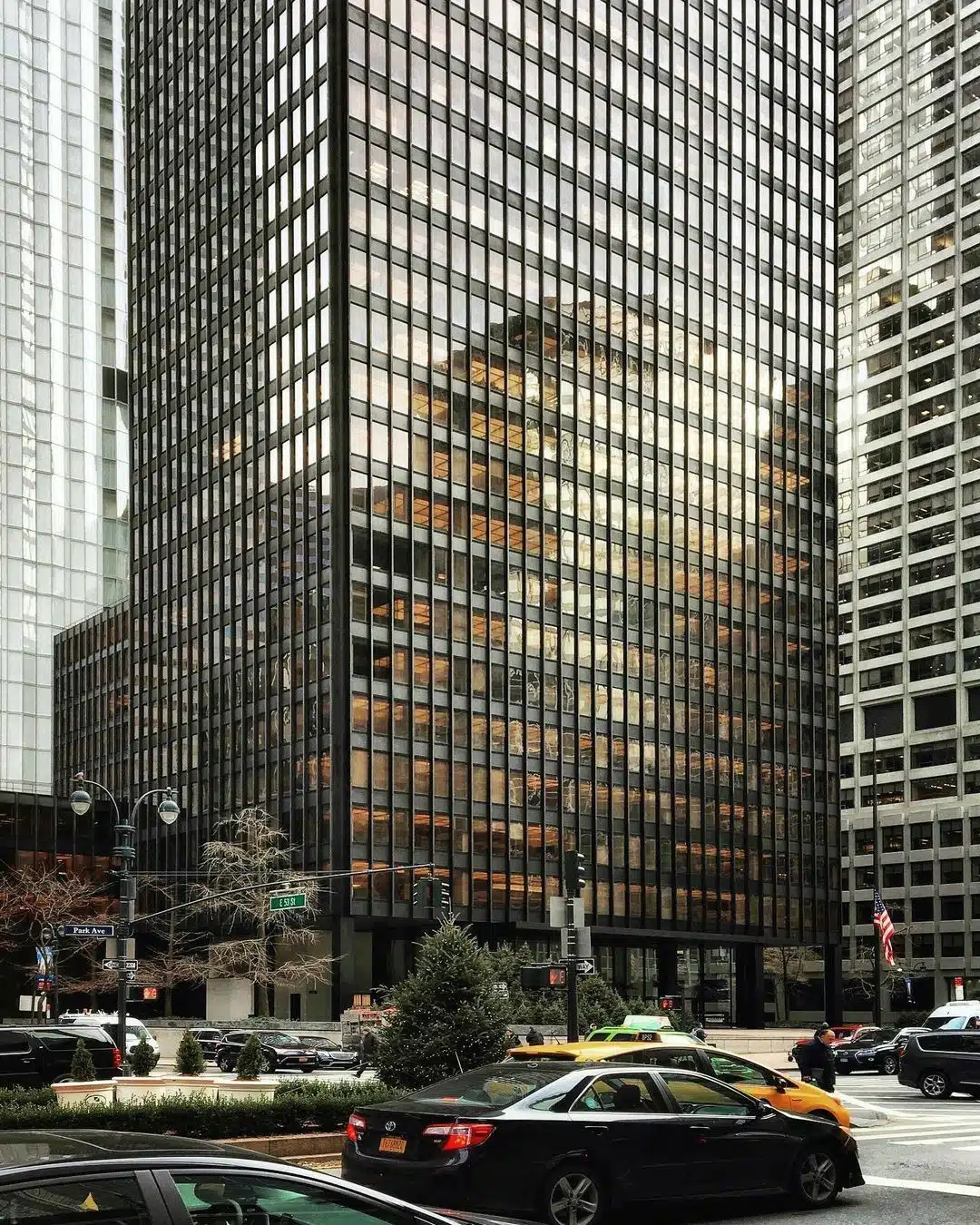
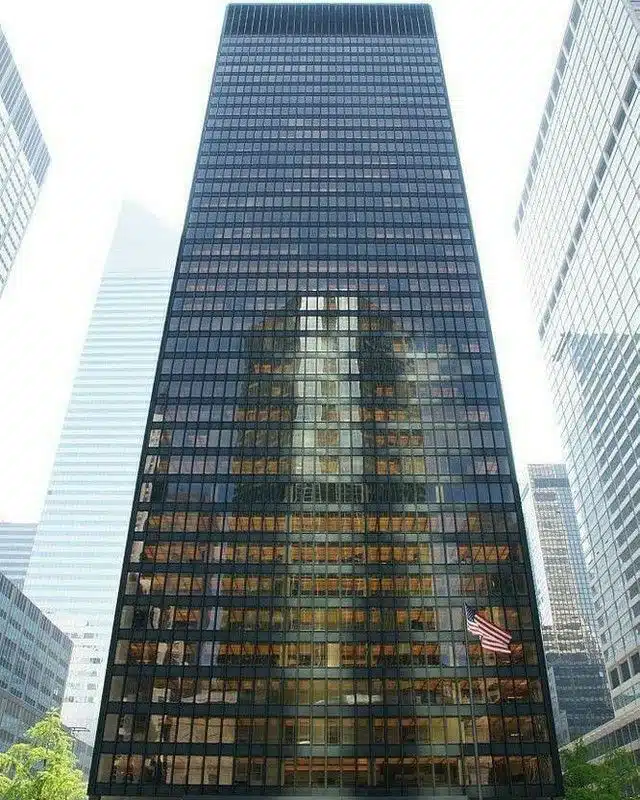
The Seagram Building is located on one of the most famous streets in Manhattan: Park Avenue, near Grand Central Terminal. It is an iconic work of modern architecture, and due to its history and design it fits perfectly into the previous description.
Starting with the legend, we must refer without a doubt to the last name of the building. After the middle of the 19th century, Joseph Seagram took control of a distillery in Ontario, Canada. Among others, the company’s star product was gin. The business was maintained and prospered between the end of the century and the first decades of the 20th century.
The dry law
It was during the years that the dry law lasted when the company became big.
First by buying a disused American distillery and rebuilding it in Canada.
Later, producing gin, whiskey and other distillates that were sent to the island of Saint Pierre et Miquelon, where it was loaded onto ships that were scattered throughout the American Atlantic coast in the famous “Rum Rows”, anchoring three nautical miles from the coast. and awaiting the arrival of small smuggling boats.
And, finally, in anticipation of the end of prohibition, amassing a huge stock of the drink to dominate the reopened American market.
commercial vision
Seagram on Park Avenue
Whether due to mischief, illegality or commercial vision, the company became strong and positioned itself among the large companies in the sector. Income soared and made it possible to acquire a plot of land on Park Avenue, a few meters from the Waldorf-Astoria and sharing a postal district with the headquarters of large American companies.
It only remained to erect the building intended to be Seagram’s flagship. However, as we have been saying, an emblematic building requires legend and proportion. The first – the title announces it – is the gin and everything that the Seagram brand carries with it. The second, proportion, came from the hand of Mies van der Rohe, perhaps the architect who worked the most and best on steel construction.
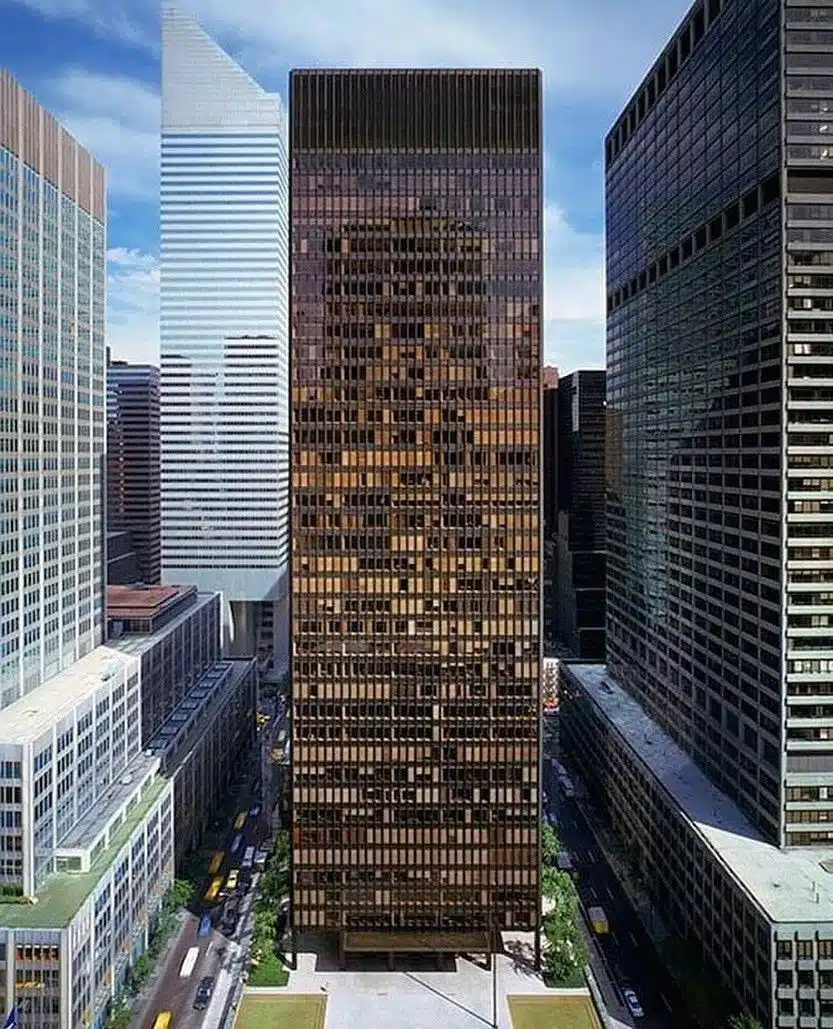
Thus, the cocktail is ready to serve: Gin&Steel, legend and proportion. Given the characteristics of the site and its surroundings, Mies made a surprising but at the same time effective first move: he withdrew the building towards the interior of the plot, giving rise to a large access plaza.
In this way he achieved three purposes thanks to a single movement. On the one hand, he flouted the municipal ordinance to progressively withdraw the façade plane as the building gains height, in order to allow sunlight to reach street level. By moving the building first, Mies was able to project a clean, pure volume, without compliments.
The second advantage is that, in a street as densely populated as Park Avenue, where all the big corporations want to demonstrate their power, the emptiness in the first front line generates an attraction, curiosity and mystery, impossible to match by any of the others. buildings.
The fierce competition between giants who want to mark territory causes them to cancel each other out, while the imperceptible Seagram becomes a focus of attention as, little by little, one discovers more parts of his physiognomy.
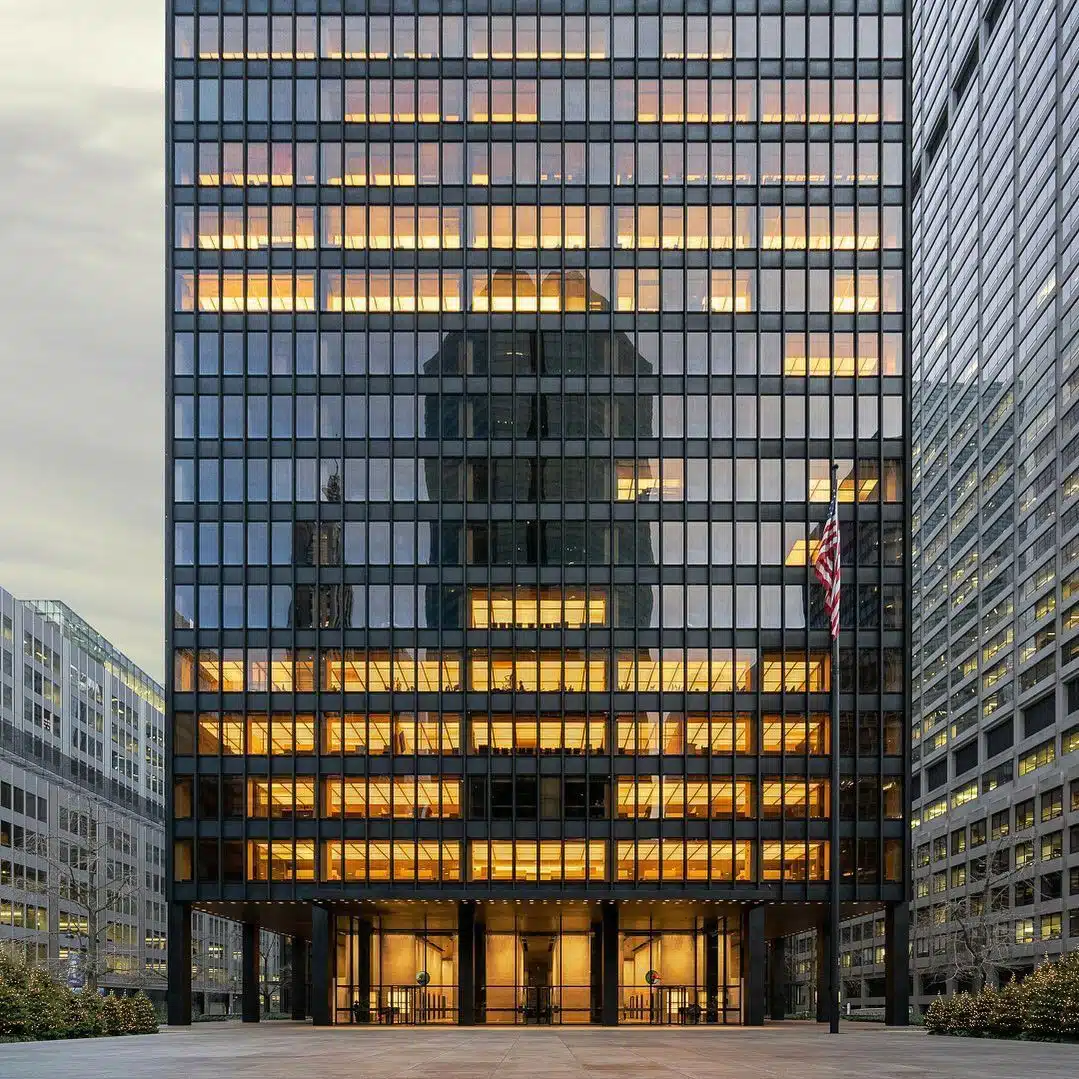
Finally, the access square dignifies the arrival to the building, placing it on a podium and comparing it to a classical temple. In addition, it allows you to clearly observe the simple and elegant volumetry, without having to go too far or strain your eyes towards the sky.
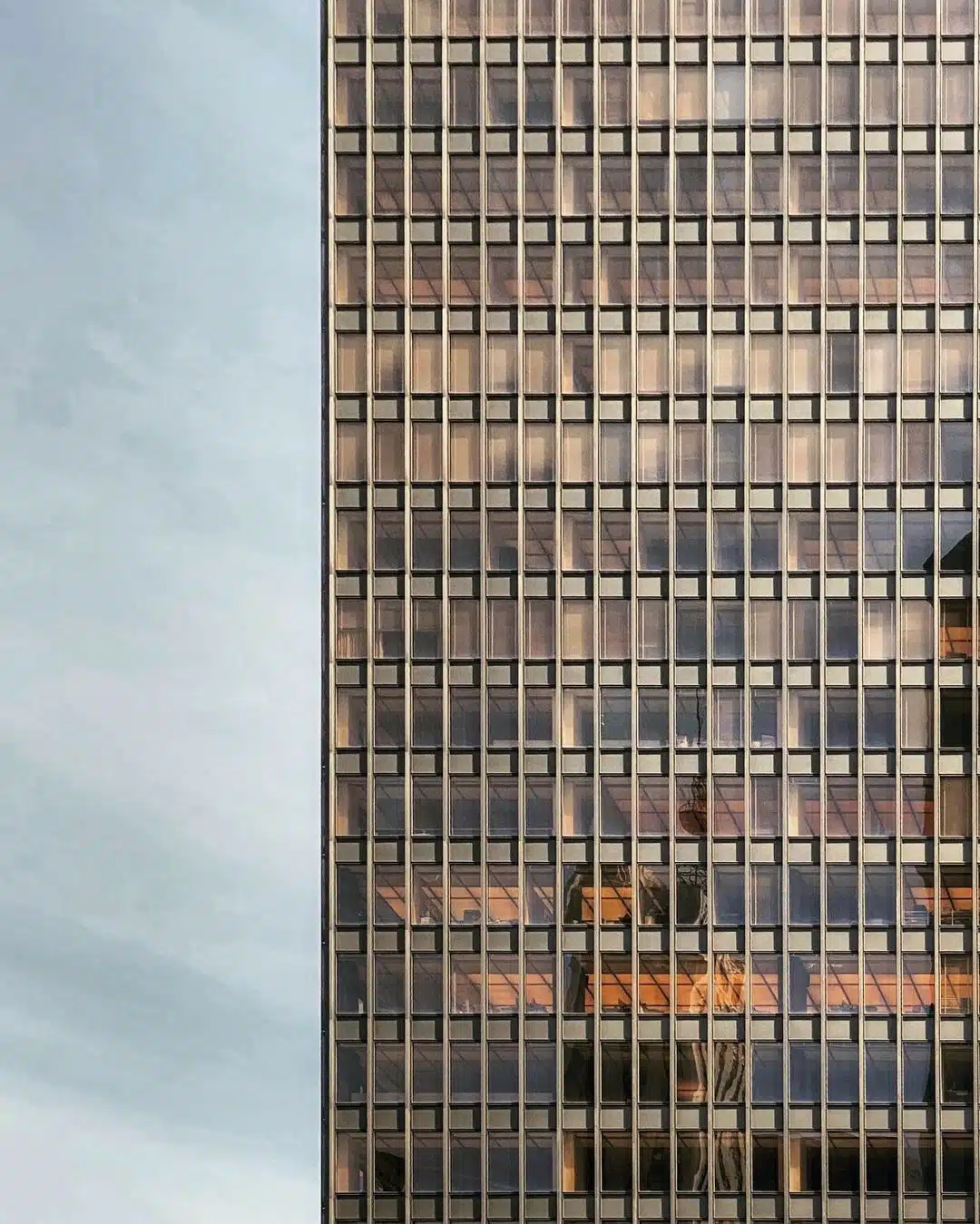
The building is a huge framework of steel and glass. As in so many other buildings of the time, the dialectic between metal and glass, between opaque and transparent, is the axis that articulates the aesthetics of the project. However, in the Seagram building both steel and glass are covered in a bronzed patina that minimizes the contrast between materials and emphasizes the sense of unity and monolithism.
The concept
Mies van der Rohe and steel
The essential concept that, according to Mies, a skyscraper must express is the idea of structure. The structure of the Seagram is, how could it be otherwise, made of steel, although due to the requirements of the American building code, the pillars were encapsulated in concrete to prevent their collapse in the event of direct exposure to fire.
The solution that the German architect found to express the true identity of the building is found in the façade. Mies added IPE profiles in a plane superimposed on the glass. This detail, this ornament that lacks a structural function is at the same time a much more faithful expression of the constructive reality of the building.
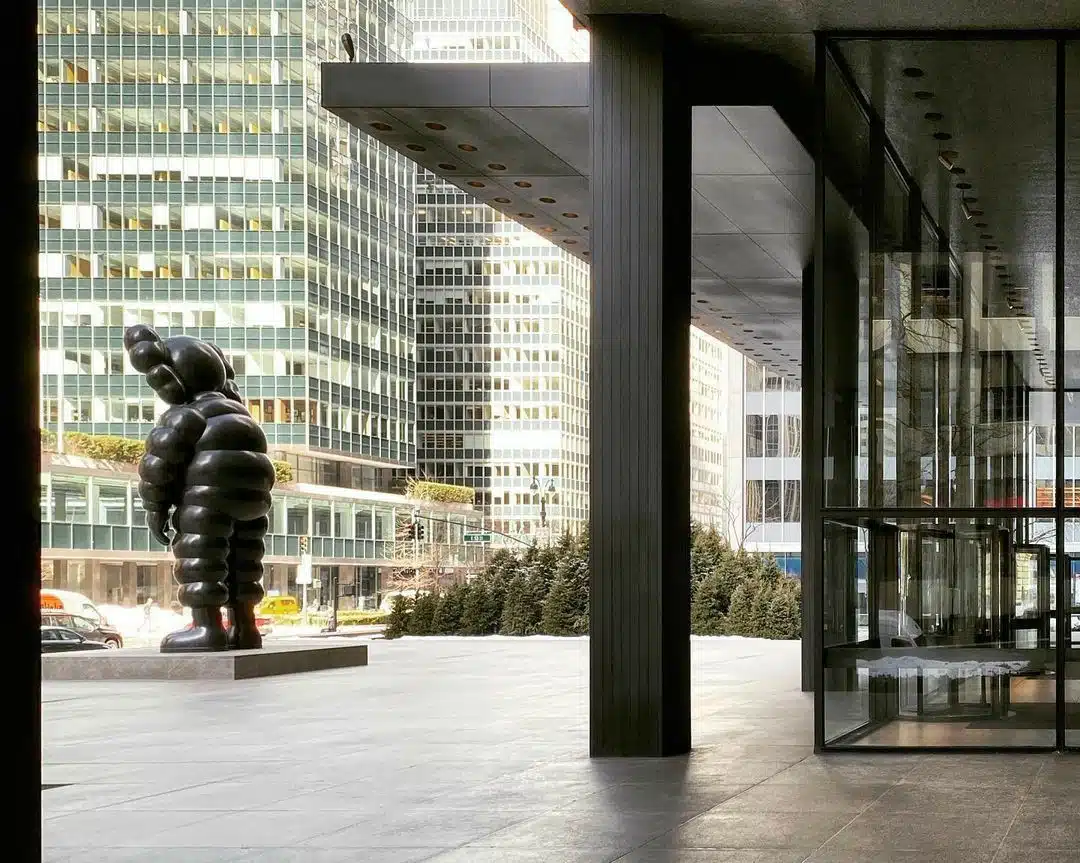
The fine shadows that the profiles cast on the glazed plane help to make visible a second, imaginary, but perceptible plane, parallel to and at the same time confronted with the tangible façade, while at the same time providing modularity and sharpening the vertical flight of the volume.
Just as the gin and tonic has lasted for decades on the menus of cocktail bars around the world, the Seagram building has remained an iconic, timeless and pure skyscraper in the most hostile urban area on the planet, where each plot is a particular world in which architects strive to leave their mark and corporations seek to mark their territory.
In the face of currents and fleeting fashions — see pink champagne or facades with LED sets — genuine products cling to their principles: legend and proportion, gin and tonic in a crystal glass; glass and steel with capital distilled from gin; Gin&Steel.


0 Comments